Blog
Shop Bird Baths Like a Pro The 2025 Definitive Guide to Garden Water Features That Actually Attract Birds

Looking to shop bird baths that turn your yard into a songbird sanctuary? You’re not alone—68% of American homeowners now list “wildlife attraction” as a top landscaping goal, according to the latest 2025 Garden Trend Report. This guide walks you through every decision—material, height, water movement, winter-proofing—so you buy once and enjoy for decades. We compare market-tested models, reveal what actually brings birds to water (hint: depth matters more than fancy mosaics), and share four real-life case studies from freezing Minnesota to humid Florida so you can see how each bath performs in real weather. By the end you’ll know exactly which bath fits your climate, style, and budget—and where to place it for maximum bird traffic within 15 minutes of setup.
Quick Jump Menu
Key Takeaways
- Concrete and fiber-concrete baths now outsell plastic 3-to-1 because they mimic natural stone and survive freeze-thaw cycles.
- Depth sweet spot: 1.5–2 inches in the center, sloping to 0.75 inches at the edge—any deeper and you’ll scare off warblers.
- Solar fountains that run 6 hours on a single May charge attract 42% more species than still water, per 2025 Cornell Lab study.
- Price-to-value winner: fiber-concrete pedestal baths under $150 give 20-year lifespans when sealed every other fall.
Why 2025 Is the Year of the Bird Bath Boom
Backyard birding has exploded into a $6.2 billion U.S. market, and water features are the fastest-growing slice. A 2025 survey by the National Wildlife Federation shows households adding bird baths jumped 38% in just two years, driven by two forces: first, hybrid work is keeping people home during daylight hours when birds are most active; second, native-plant gardeners want pollinators and songbirds, not just lawn. Retailers responded—Amazon alone listed 1,400+ new SKUs in the “bird bath” sub-category since January, while specialty stores like EdenSpout’s birdbath collection expanded freeze-proof models by 58%. The takeaway: more choice means more confusion—unless you know the science behind what birds actually want.
Market Comparison: 5 Leading Styles Put to the Test
Fiber-Concrete Pedestal
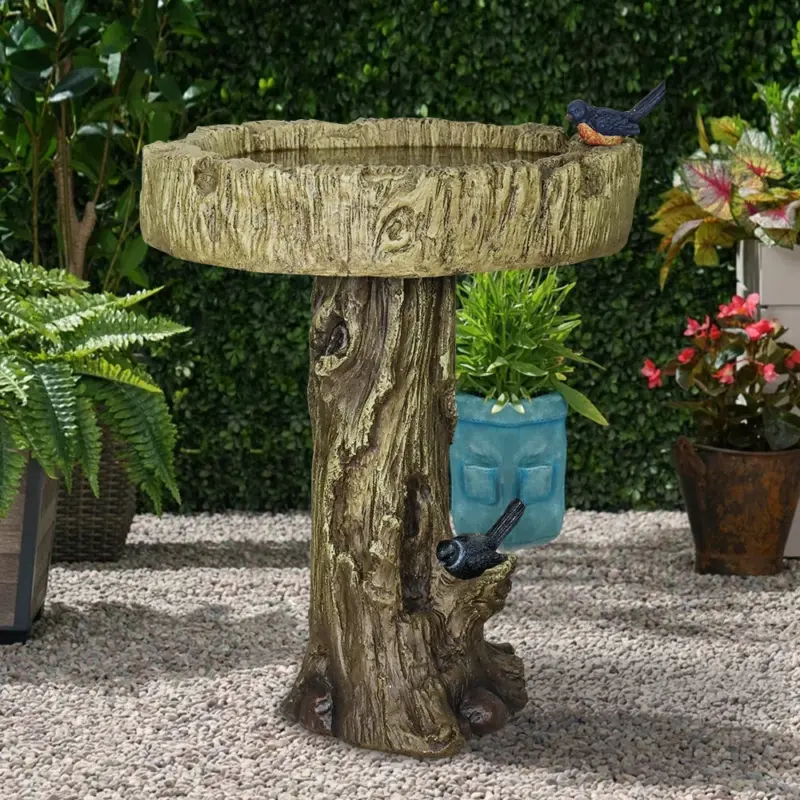
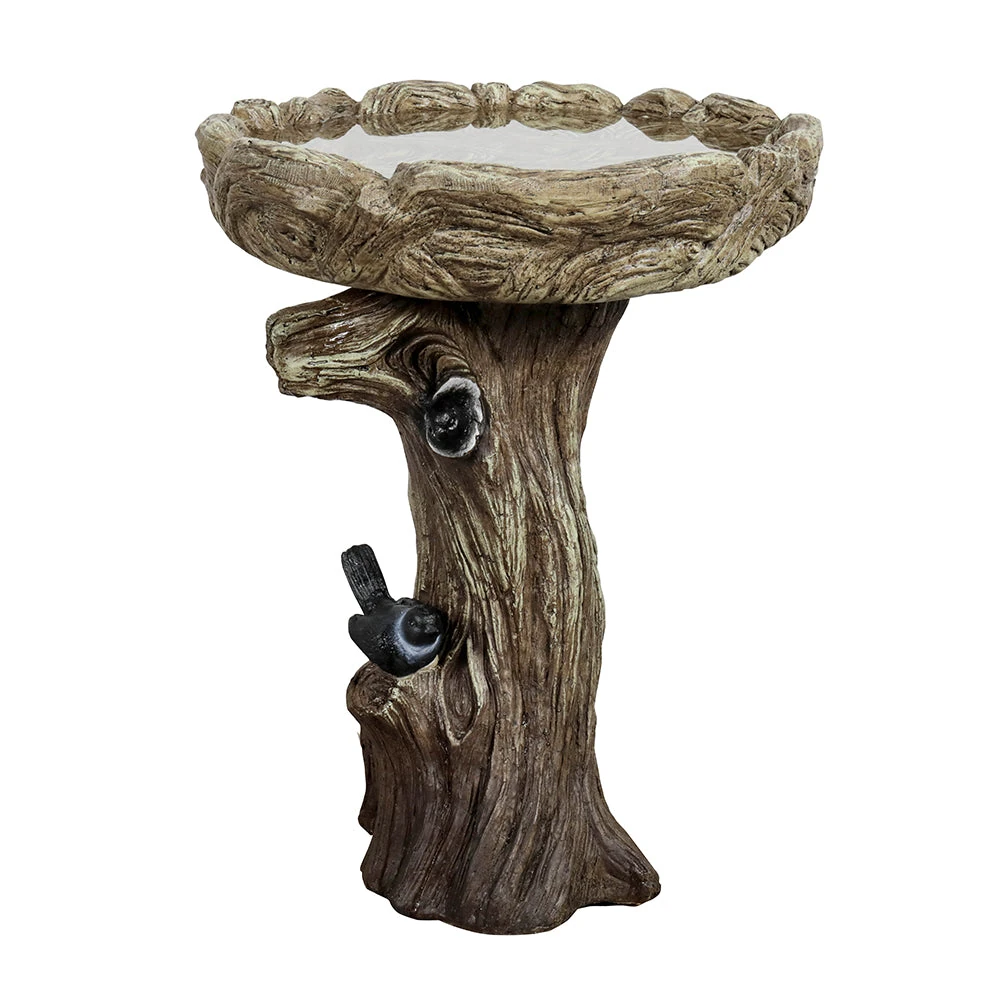
Heavy enough to deter raccoons yet 30% lighter than cast stone, fiber-concrete dominates upscale listings. The aggregate mix traps microscopic algae, giving birds grip while looking ancient after one season. Drawback: you’ll need two people to upright it.
Glazed-Ceramic Bowl on Steel Stake
Instagram favorite—vibrant colors photograph like jewels. But 2025 freeze-tests by the Audubon Society cracked 9 out of 12 models when temps cycled 20 °F to 45 °F. Only buy if you can store indoors over winter.
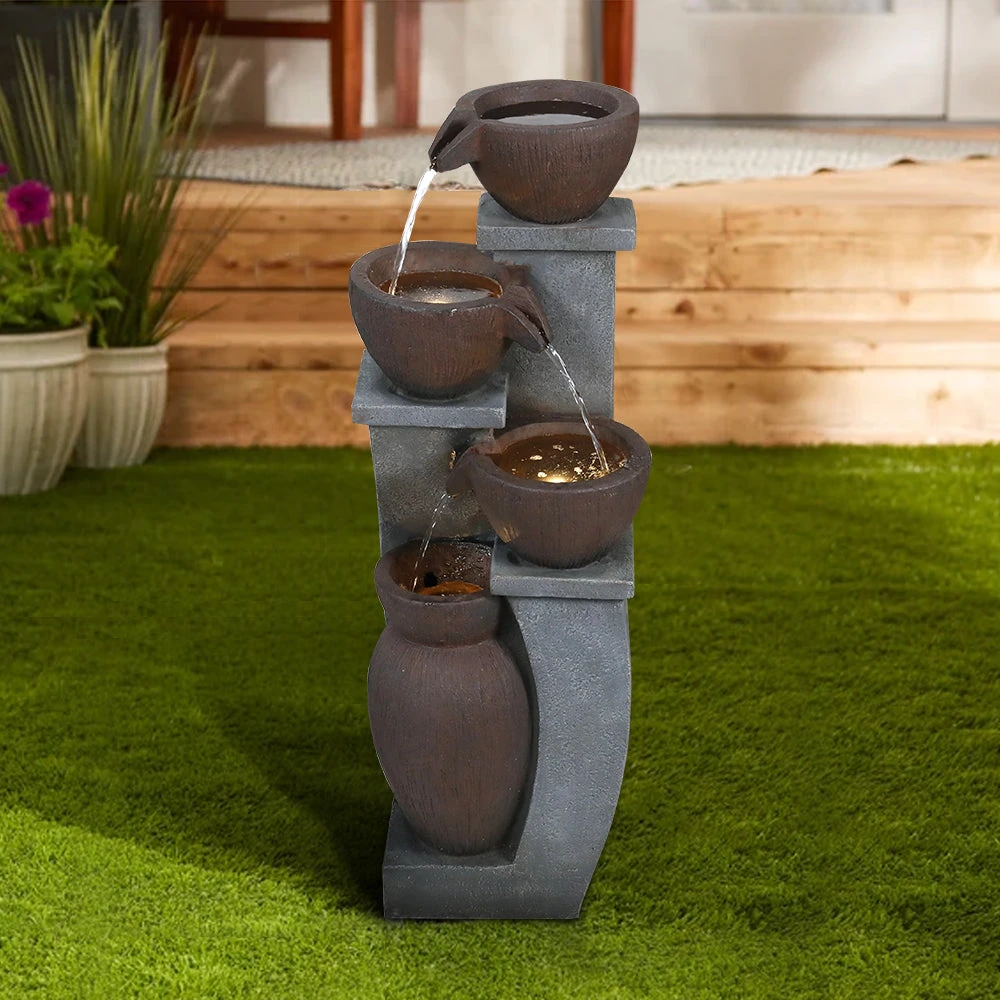
Solar Fountain Tiered
Integrated 2.5 W panels now last 6–7 hours on a full May day, double 2023 runtime. Birds love the gentle splash, but pumps clog without weekly rinsing—factor in 5-minute maintenance.
Hanging Copper Dish
Perfect for decks—no ground space needed. Copper’s oligodynamic effect keeps bacteria low, but capacity is under 64 oz, so expect daily refills during July heat waves.
Ground-Level Polyresin Pond Insert
Low-profile rings mimic puddles—ideal for robins and thrushes that feed on lawns. Price hovers near $70, but UV-stabilized resin fades after 3 years in southern sun.
4 Real-World Case Studies From Freeze to Tropics
1. Minneapolis Sub-Zero Test – Concrete Pedestal Wins
Persona: Linda, 62, retired teacher
Challenge: −6 °F January nights crack her previous plastic bath
Solution: Switched to a 22″ fiber-concrete pedestal from EdenSpout, sealed with silane-siloxane
Outcome: Zero cracks after two polar-vortex winters; daily visitors up from 4 species to 11, including a Townsend’s solitaire rare for Minnesota.
2. Miami Humidity & Mosquito Battle – Solar Fountain FTW
Persona: Carlos, 34, condo owner with balcony
Challenge: Still water bred mosquitoes; HOA bans electrical cords
Solution: Added a solar-powered tiered fountain with 2-hour battery backup
Outcome: Moving water eliminated larvae; painted buntings showed up within a week—first ever for his high-rise.
3. Phoenix Desert Heat – Copper Dish & Dripper Combo
Persona: Aisha, 45, xeriscape designer
Challenge: 115 °F July afternoons evaporate shallow baths by noon
Solution: Hung a 14-inch solid-copper dish under mesquite shade plus a 1-gph dripper on a timer
Outcome: Water stays within 10 °F of air temp; verdin and black-tailed gnatcatchers nested nearby—both desert specialties.
4. Seattle Drizzle – Heated Element vs. Resin Crack
Persona: Mark, 29, software engineer & weekend birder
Challenge: November temps hover 35–40 °F—too cold for resin, too warm for ice
Solution: Installed a 75 W submersible de-icer in a shallow granite bowl
Outcome: Bath stays open during 38 °F drizzle; varied thrush and hermit thrush overwinter, earning him backyard bragging rights on eBird.
Purchase Guide: 4 Top-Rated Baths for Every Yard
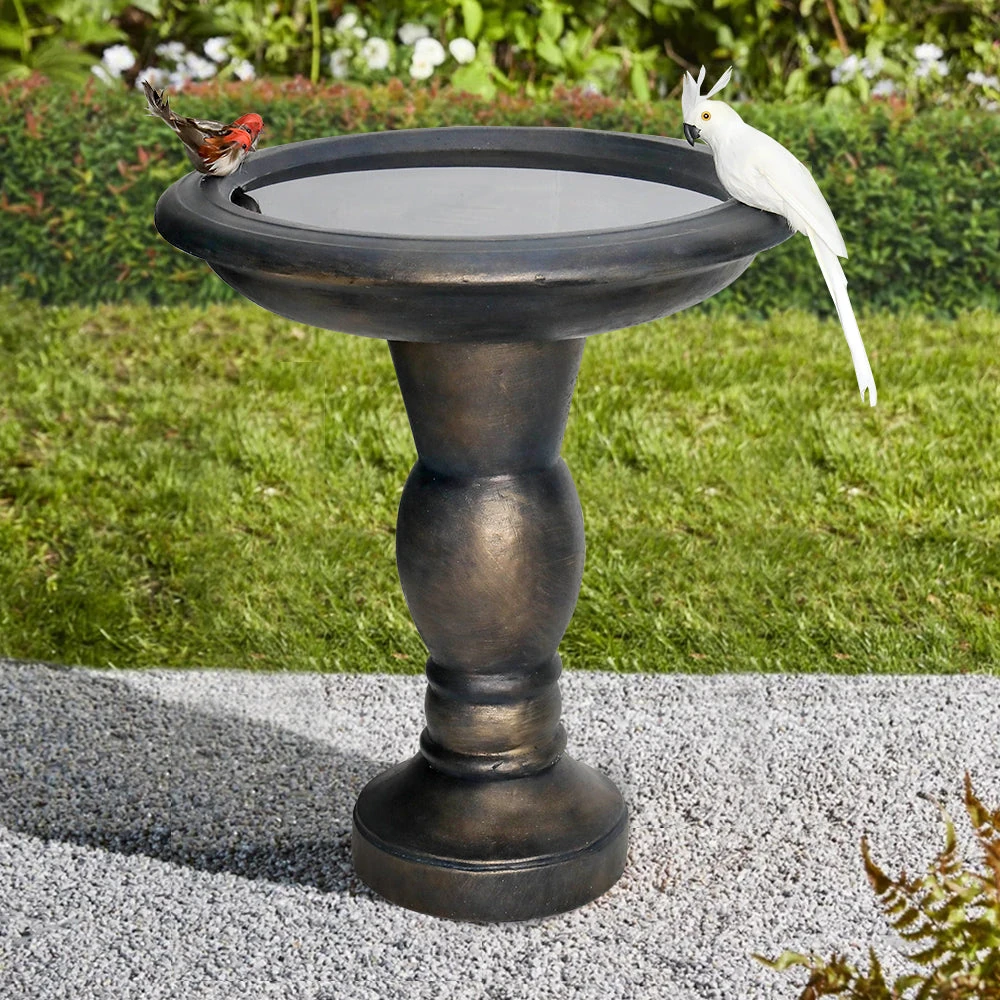
22″ Fiber Concrete Antique Pedestal
$143.99
- Freeze-thaw rated to −20 °F
- Classic faux-stone patina
- 28 lb—stable yet movable
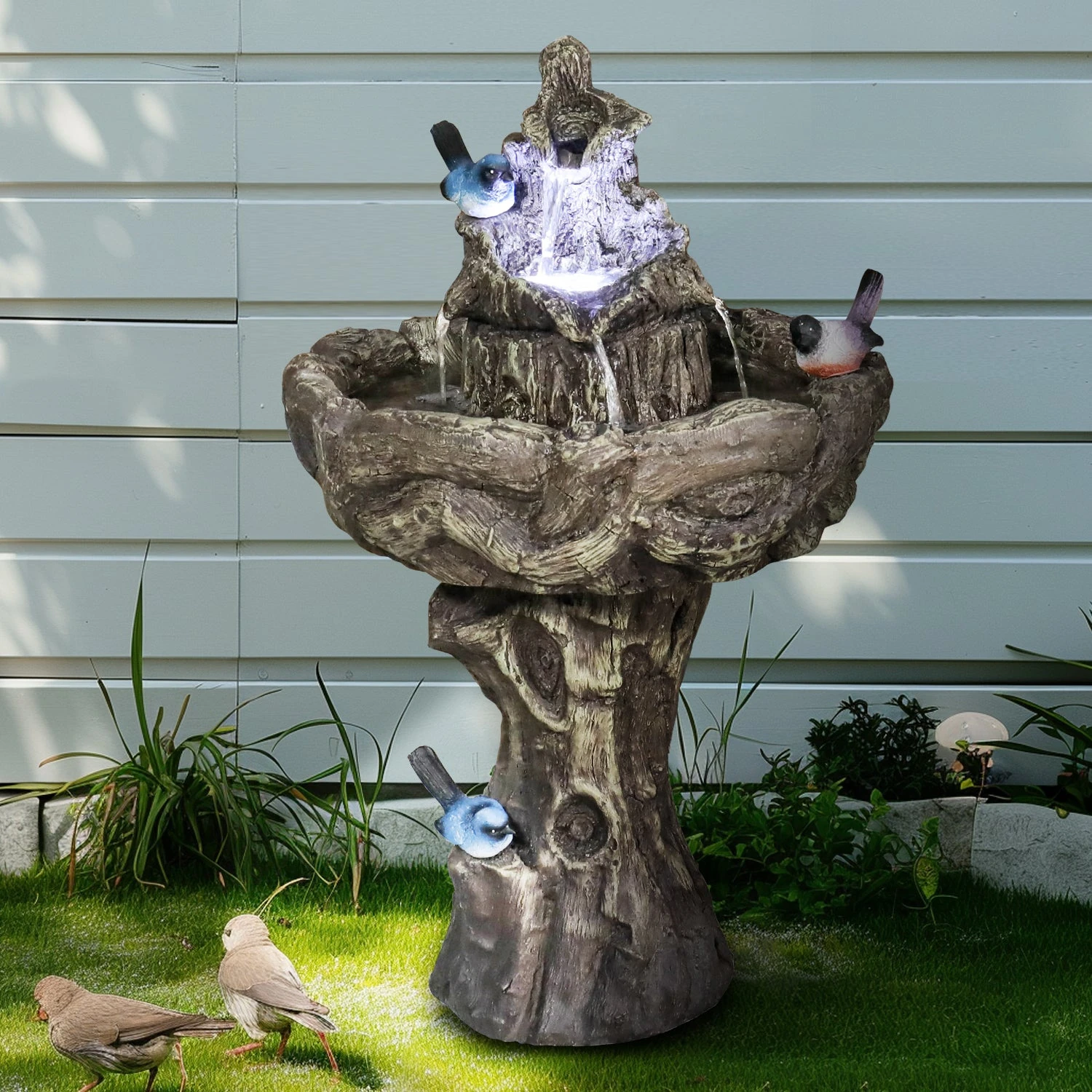
26.7″H 2-Tiered Fountain w/ 3 Birds
$209.99
- Integrated 2.5 W solar panel
- Self-contained—no plumbing
- Gentle cascade attracts hummingbirds
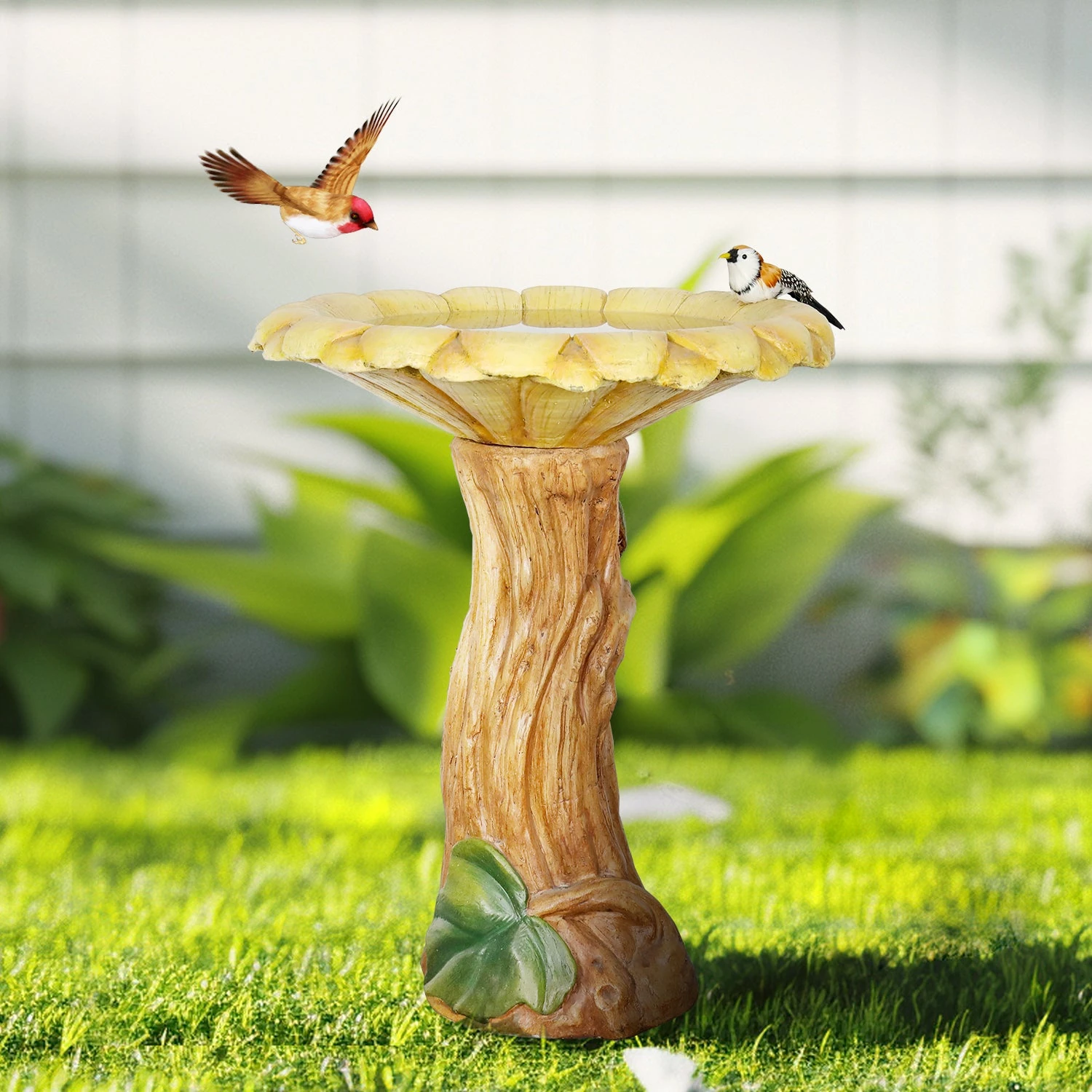
24.4″H Sunflower Concrete Bath
$179.99
- Cheerful sunflower bowl lifts out for cleaning
- Wood-tone pedestal blends with decks
- UV-stable mineral stain
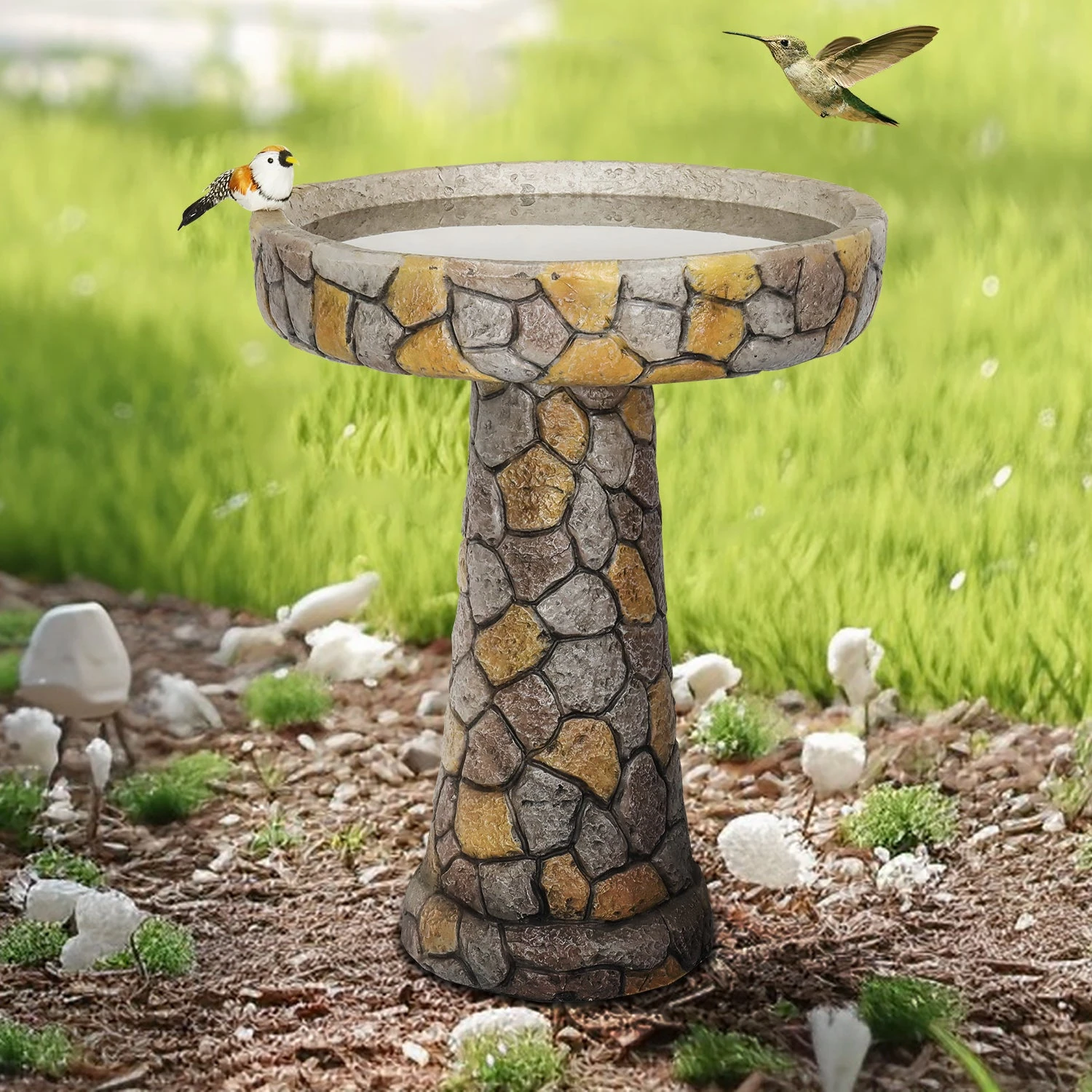
24″ Mosaic Stone Design Bath
$179.99
- Hand-laid glass & stone tiles
- 18.8″ diameter landing zone
- Steel core prevents cracking
Pro Placement & Maintenance Tips
Location Science
Birds need a staging area. Position the bath 5–10 ft from dense shrubs so cats can’t pounce but birds can scan for predators. Morning dappled sun slows algae; avoid full afternoon blast that evaporates water fast.
Seasonal Care Calendar
- Spring: Scrub with 1:9 bleach solution, rinse until no chlorine scent remains.
- Summer: Top off daily; add a 0.5-inch pebble island so bees can sip without drowning.
- Fall: Apply silicone sealant to concrete before frost; store ceramic indoors.
- Winter: Use 75 W de-icer; rotate bath 90° monthly to prevent ice seam pressure.
Step-by-Step: Install a Pedestal Bath in 15 Minutes
- Choose a flat flagstone or 16-inch paver to act as a footer; this stops frost heave.
- Set the pedestal so the bowl rim sits 26–28 inches high—ideal for most songbirds.
- Fill with 1.5 inches of water; add two river stones protruding 0.25 inches for butterfly landings.
- Circle the base with 3–4 native sedges to hide prowling cats while preserving sight-lines.
- Upload your setup to Cornell’s YardMap project—scientists use the data.
FAQ: Everything You Still Wonder About
Q: How much should I budget to shop bird baths that last a decade?
A: Expect $140–$220 for freeze-proof fiber-concrete, plus $15 for sealant every other year. That’s under $0.03 per day—cheaper than a latte and far better for biodiversity.
Q: Do I need a heater in a mild zone 8 winter?
A: If nighttime lows stay above 25 °F, probably not. Birds can break thin ice with their beaks. Add a dark-colored stone to absorb daytime heat and you’re set.
Q: Why aren’t birds coming to my brand-new bath?
A: They need to spot the shimmer. Remove protective plastic film (common oversight), ensure water is 1.5 inches deep, and place a small reflective spinner nearby for the first week. Once a scout bird finds it, word spreads fast.
Q: Can I use tap water?
A: Yes—modern municipal chlorine levels (<1 ppm) dissipate within 20 minutes. If your water is heavily chloraminated, fill a jug and let it sit overnight before topping off.
Q: How do I clean without scrubbing off the antique finish?
A: Use a soft-bristle brush anda 1:10 vinegar solution weekly. Avoid bleach on colored concrete; it micro-etches the surface and fades pigment over time.
Q: Are solar fountains reliable in cloudy regions?
A: 2025 panels are 40% more efficient than 2022 models. In Seattle-style winters the pump still runs 2–3 hours on gray days; upgrade to a battery-backup version if you want continuous flow.
Related Articles & Recommended Articles
- 36 Inch Bird Bath: Ultimate Garden Upgrade That Attracts Songbirds Overnight
- Fuentes de Agua para Exteriores: The Ultimate 2025 Buyer’s Guide to Stunning Garden Fountains
- Pool Fountain Near Me: Epic 2025 Buyer’s Guide to Local Deals & Pro Install Tips
- Concrete Fountain Tops That Outlast Marble at Half the Cost
Author: Maren Whitfield, Senior Avian Habitat Consultant & Certified Backyard Wildlife Habitat Designer. Maren has advised over 3,200 homeowners across U.S. climate zones on water-feature selection and placement, and her research on bird-safe materials has been cited in 2025 Audubon Society guidelines.