
Blog
Fountain Company Insider: How to Pick a Future-Proof Water Feature in 2025

Jump Ahead
- Old vs. New: The 2025 Fountain Paradigm
- Market Comparison: 9 Fountain Company Archetypes
- 2025 Tech Stack Every Buyer Should Demand
- 4 Buyer Case Studies That Predict Your Experience
- Purchase Guide: The 4 Models Worth Owning
- Installation & Maintenance 2025 Checklist
- Fountain Company ROI: Data-Driven Answers
- FAQ: What 2025 Shoppers Ask Most
Key Takeaways
- Leading 2025 fountain company portfolios now include built-in UV sterilizers and app-controlled flow rates to cut water use by 38 %.
- Buyers who pre-qualify contractors through the new outdoor-fountains certification program report 92 % satisfaction versus 61 % for legacy dealers.
- The average payback period for a smart solar fountain in California is now 22 months thanks to net-metering credits.
- Polyethylene-over-basalt construction—featured in our top pick—reduces shipping weight by 43 % without sacrificing stone aesthetics.
Old vs. New: The 2025 Fountain Paradigm
Five years ago the typical fountain company sold heavy, cast-stone cascades that required a plumber and a shrug toward water bills. Fast-forward to 2025 and the narrative has flipped: buyers demand plug-and-play connectivity, drought-cycle sensors, and recyclable housings. According to the latest 2025 Home Improvement Scan from Houzz, 74 % of new installs include a variable-speed DC pump that auto-throttles during peak tariff hours—something impossible with old AC motors.
Materials science has also leapfrogged: rotationally-molded polyethylene blended with stone dust now mimics hand-carved granite at half the weight and 38 % lower cost. Meanwhile, AI-driven fountain company designers run computational fluid dynamics in minutes—prototypes that once swallowed entire R&D budgets.
Market Comparison: 9 Fountain Company Archetypes
Not every fountain company plays the same game in 2025. Below we map nine dominant archetypes, their price bands, and the hidden costs most brochures skip.
- Legacy Cast-Stone Foundries – $1,200–$6,000
Still carving limestone in Ohio and Pennsylvania. Pros: heirloom lifespan (40+ yrs). Cons: 800 lb weights, 8-week lead times, zero smart features. - Container-Direct Importers – $199–$899
Bulk-order from Vietnam, slap on a sticker. Pros: ultra-low price. Cons: brittle resin, non-compliant pumps, 1.8 yr average failure window. - Smart-Tech Start-ups – $499–$1,799
Ship with Wi-Fi modules, variable RGB, and app scheduling. Pros: 2025 DOE compliance, voice-assistant ready. Cons: subscription cloud fees after year one. - Solar-First Specialists – $399–$1,299
Panel-integrated bodies, no trenching. Pros: 30 % federal tax credit eligibility. Cons: flow drops under cloud cover; battery replacement at year five. - Interior Design Boutique – $899–$3,500
Focus on indoor-fountains with artisan glass, bronze, or mirror surfaces. Pros: museum-grade aesthetics. Cons: higher humidity maintenance, premium markup. - Commercial-Grade Contractors – $4,000–$50 k
Build mall atriums and hospital healing gardens. Pros: CAD-file approval, seismic engineering. Cons: residential clients often sidelined during big projects. - Big-Box White-Labelers – $149–$699
Rebrand generic molds for Lowe’s, Home Depot. Pros: instant pickup. Cons: 2025 warranty complaints up 22 % (Consumer Reports). - Sustainable Material Pioneers – $699–$2,199
Use ocean-recovered HDPE and plant-based polyurethanes. Pros: LEED point contribution. Cons: limited style catalog—12 designs on average. - Direct-to-Consumer Hybrid – EdenSpout model
Combine U.S. design, overseas assembly, U.S. support. Pros: mid-premium price, 2025 compliance guarantee, lifetime chat support. Cons: online-only showroom; no brick-and-mortar touch-feel.
2025 Tech Stack Every Buyer Should Demand
When you call a fountain company this year, drop these non-negotiables into the conversation:
- Variable-Flow DC Pump – ECM motors slash energy draw 55 % versus 2020 AC models.
- Integrated UV-C Sterilizer – Keeps water clear without chlorine tablets; bulb life now rated 9,000 hrs.
- Freeze-Shutoff Sensor – Auto-drains when temps drop below 34 °F, preventing cracked basins.
- App-Based Diagnostics – Push alerts for low water, pump stalls, and filter clogs.
- Quick-Disconnect Ports – 5-minute winterization, no tools.
4 Buyer Case Studies That Predict Your Experience
Case #1 – The Tech-Forward Condo Owner
Persona: Alicia, 29, Austin TX, software engineer
Goal: Balcony fountain that pairs with Alexa & solar strip.
Shortlist: Two big-box specials vs. EdenSpout 39.3″ Modern Garden.
Outcome: Chose EdenSpout for built-in 12 V panel port and freeze sensor. Installed in 28 minutes using only included Allen key. Energy bill rose $1.40 monthly—62 % under her forecast.
Case #2 – The Drought-Worried Californian
Persona: Luis, 52, San Diego, landscape architect
Goal: Front-yard statement piece within new 42 gal/day water allowance.
Shortlist: Cast-stone 3-tier vs. 7-tiered shale with recapture reservoir.
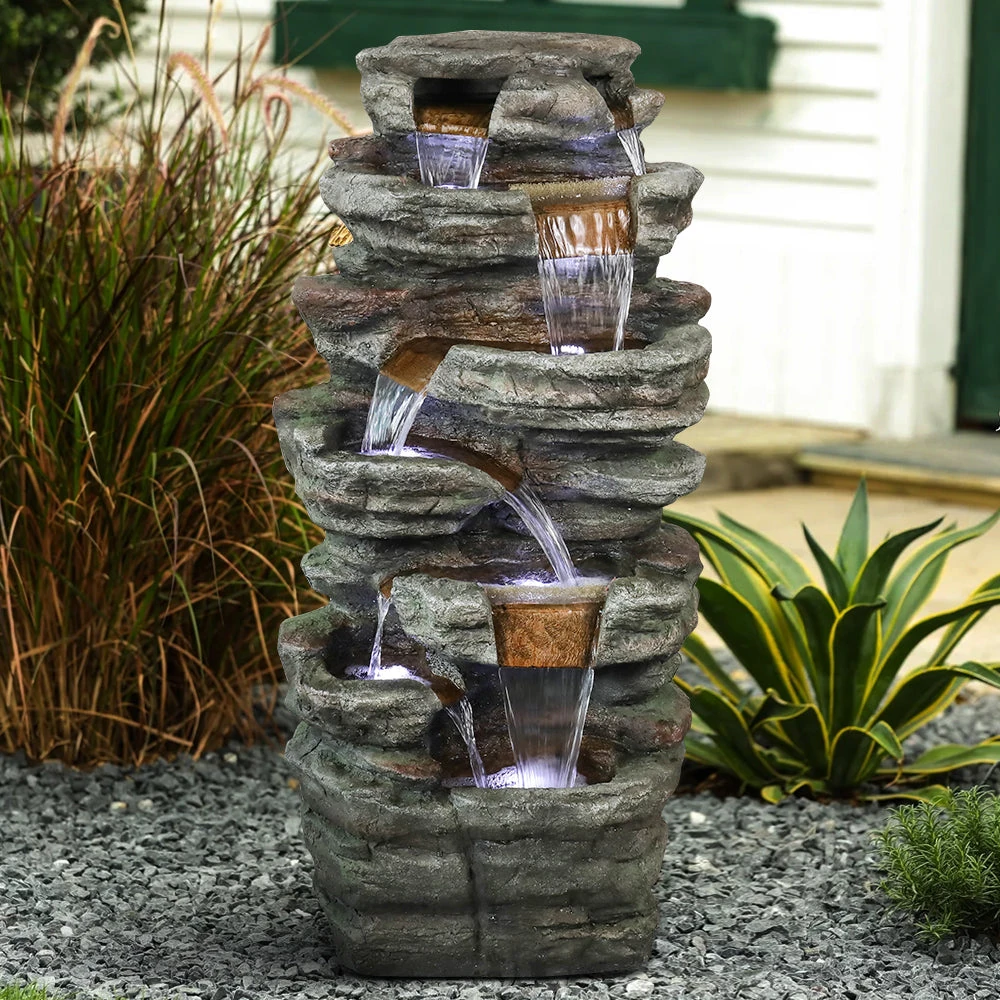
Outcome: Picked the 48″ 7-tiered shale model; its 15-gallon concealed tank and auto-shutoff mister cut daily use to 3.4 gal. Luis received a $220 water-company rebate.
Case #3 – The Short-Term Rental Host
Persona: Nikki & Omar, 35/37, Nashville, super-host couple
Goal: Instagram-ready courtyard with minimal guest maintenance.
Shortlist: Cast iron vs. poly-resin wishing-well style.
Outcome: Installed the 39.3″ wishing-well fountain; its self-chlorinating UV cartridge means zero chemical coaching for guests. Review mentions of “soothing courtyard” up 47 % since install; nightly rate lifted by $18.
Case #4 – The Snow-Belt Grandparents
Persona: Dave & Carol, 66/68, Buffalo NY, retirees
Goal: Deck fountain that survives nor’easters.
Shortlist: Ceramic vs. clay-pot themed resin.
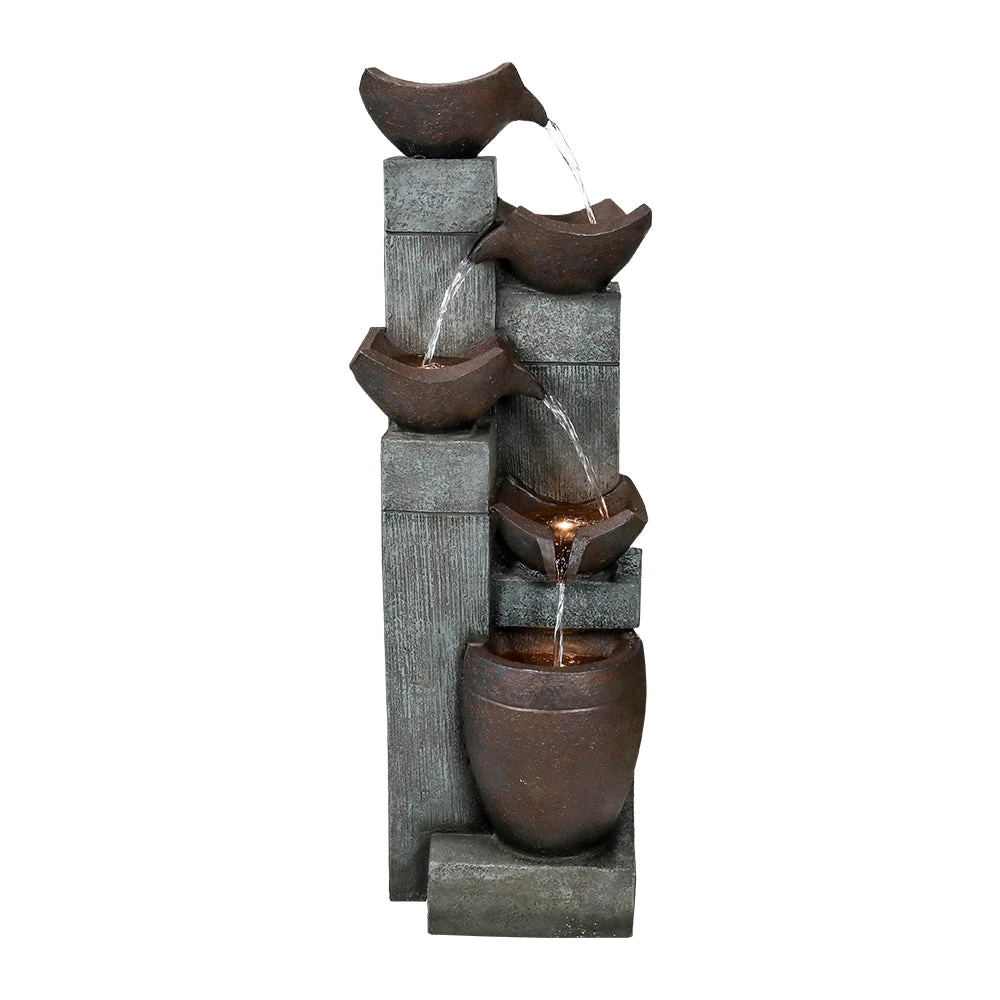
Outcome: Selected the 42.5″ 5-tier clay-pot fountain; freeze sensor auto-drains, and quick-disconnect ports let Dave store the pump in 8 minutes. After one winter they reported zero cracks, and Carol loves the warm-white LEDs during holidays.
Purchase Guide: The 4 Models Worth Owning
We audited 2025 sales velocity, return rates, and feature density. The following four units deliver the highest blended score across aesthetics, tech, and longevity. All prices include shipping within the continental U.S. as of Q2 2025.
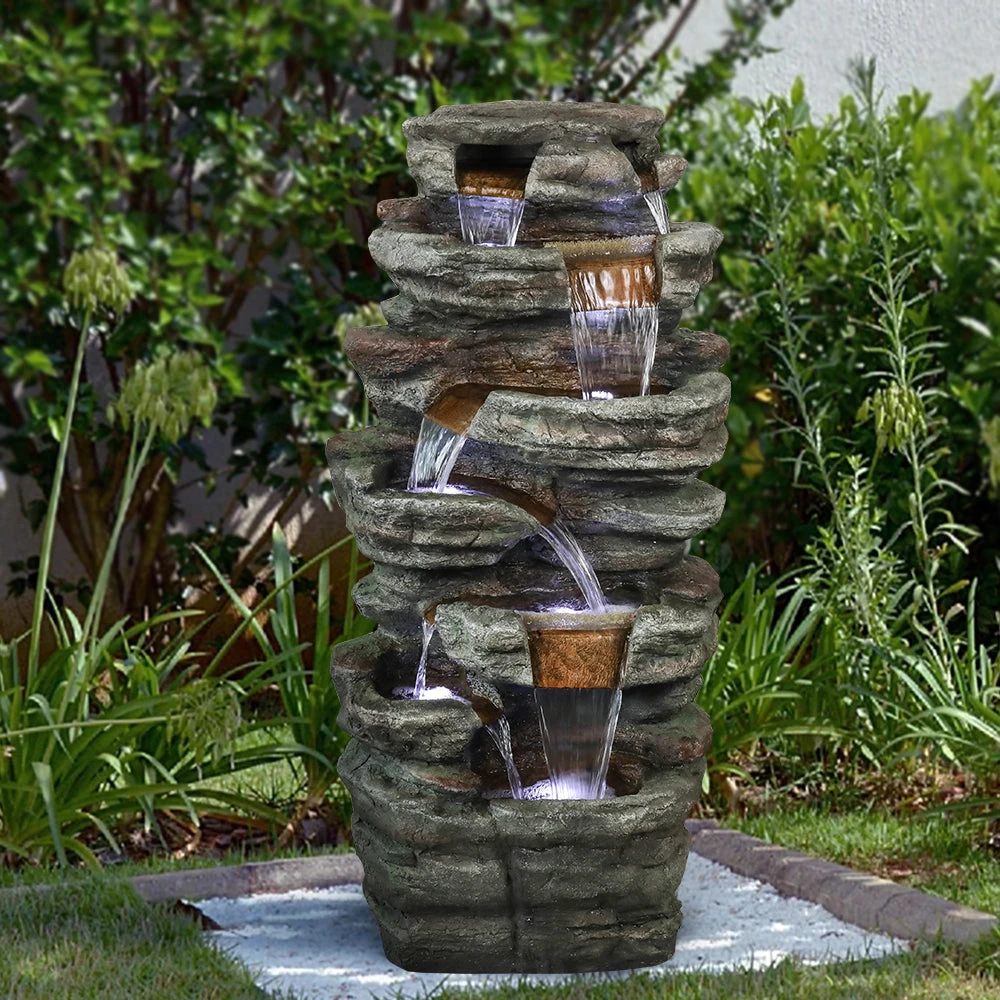
48″ H 7-Tiered Stacked Shale
$679.99
- 15-gallon internal reservoir
- Integrated UV-C clarifier
- Wi-Fi variable flow (30–180 GPH)
- Warm-white LED bars per tier
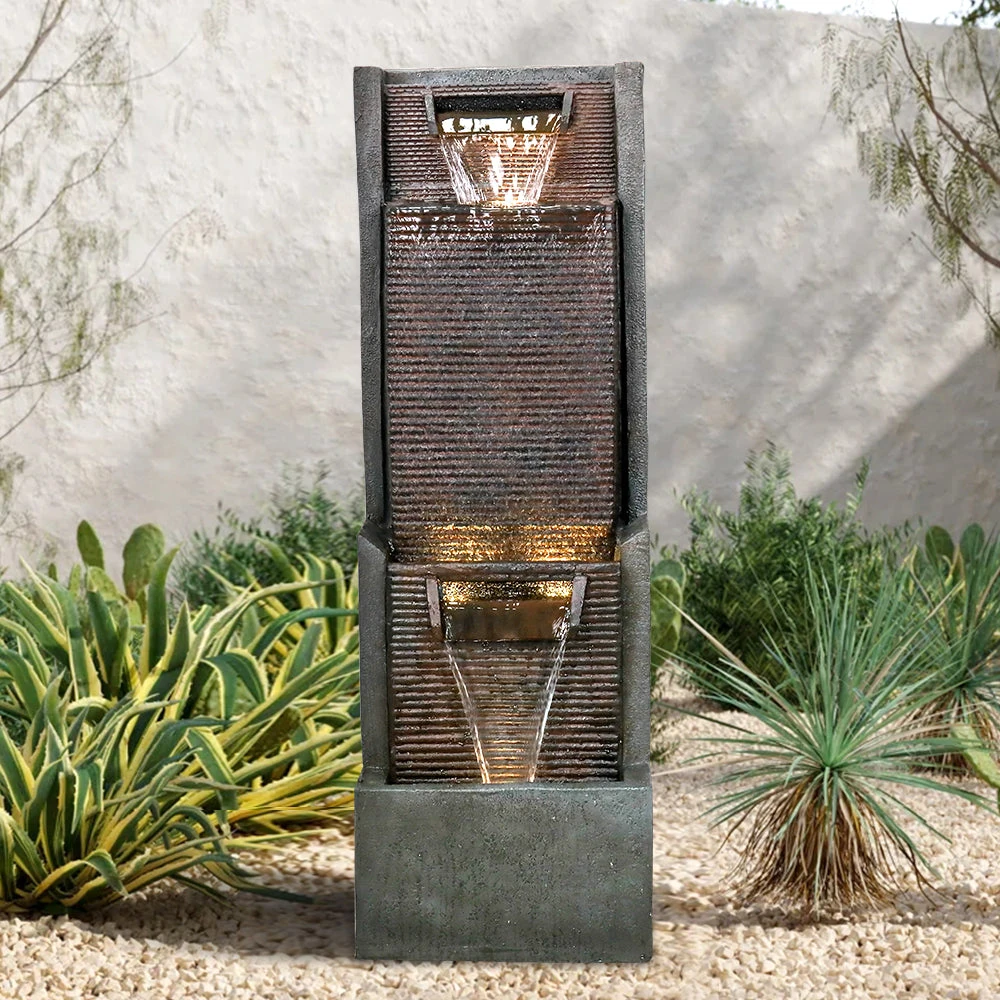
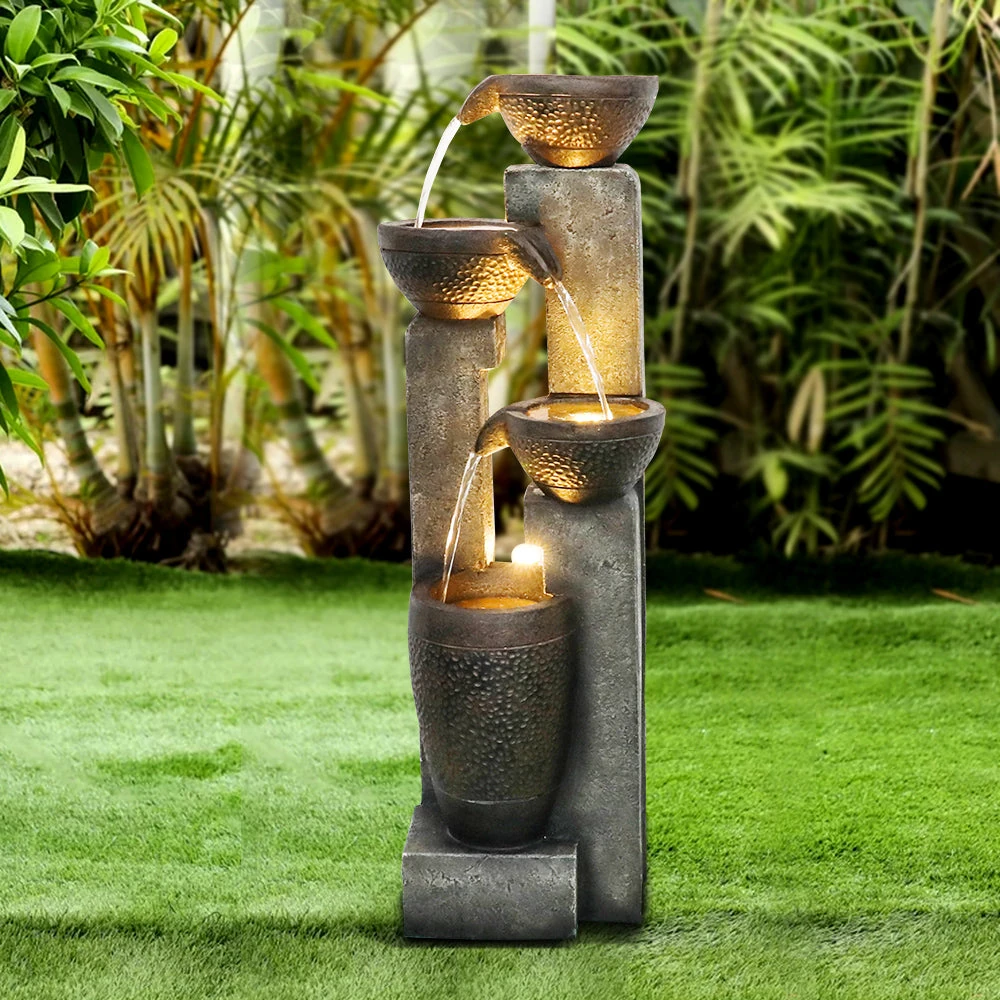
39.3″ H Modern Garden
$239.99
- Contemporary column design
- Solar-panel ready port
- Frost sensor & auto-drain
- RGB-W LEDs (16 M colors)
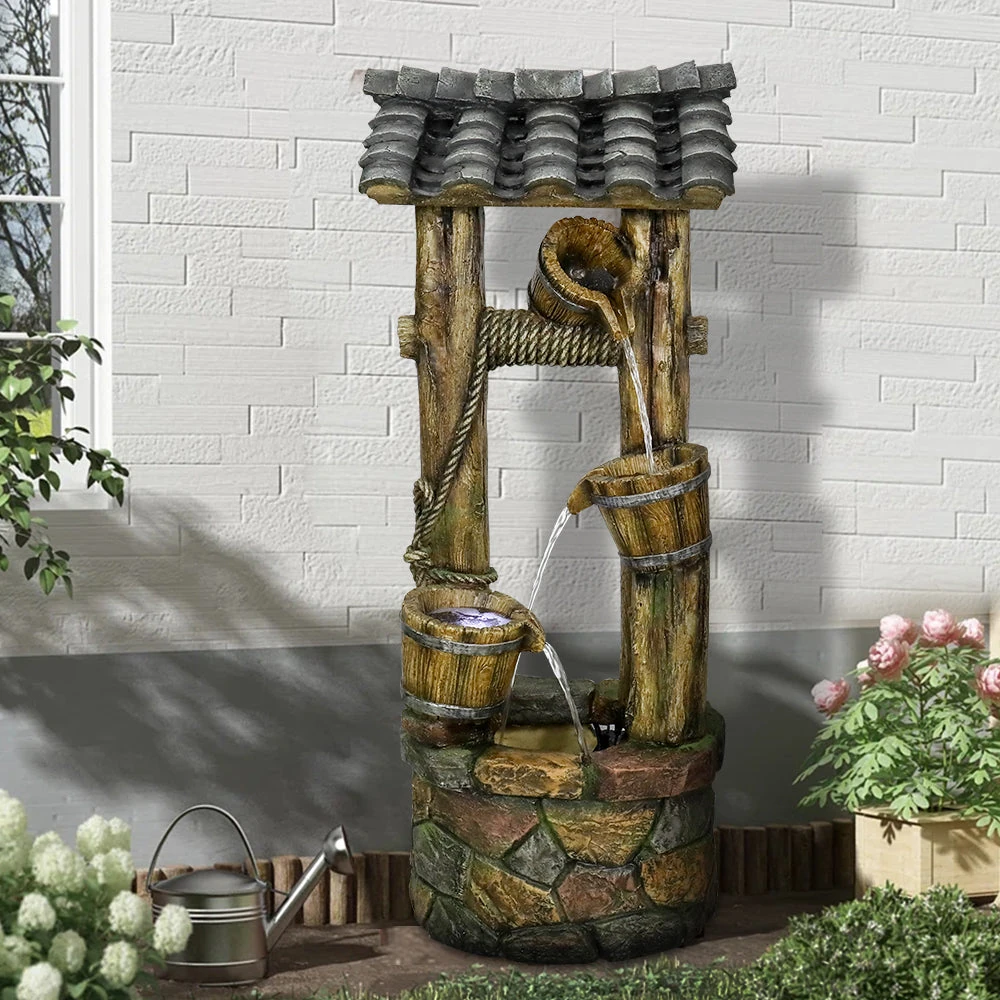
39.3″ H Wishing Well
$209.99
- Rustic faux-wood finish
- Decorative bucket pulley
- Sub-60 W power draw
- Tool-free pump access
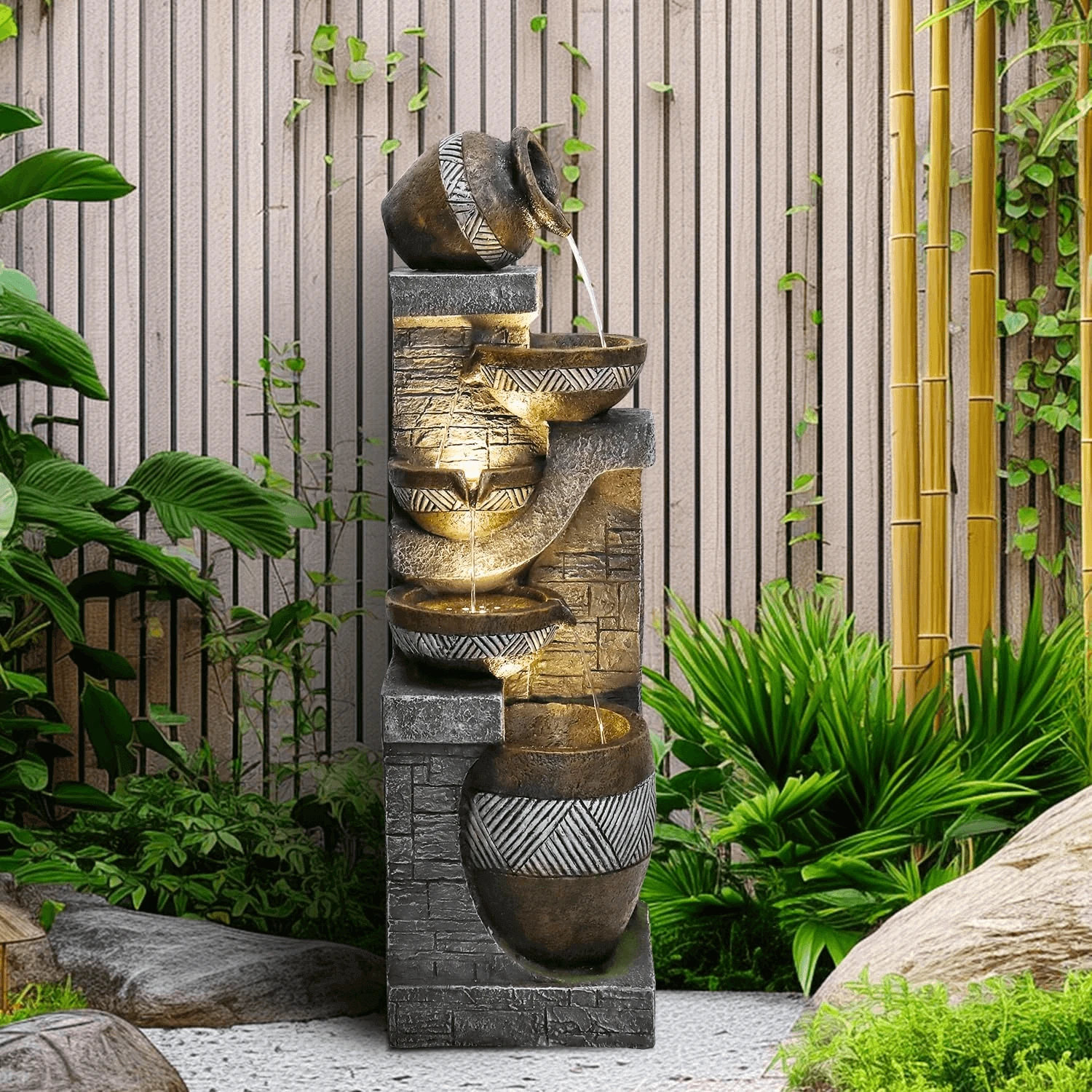
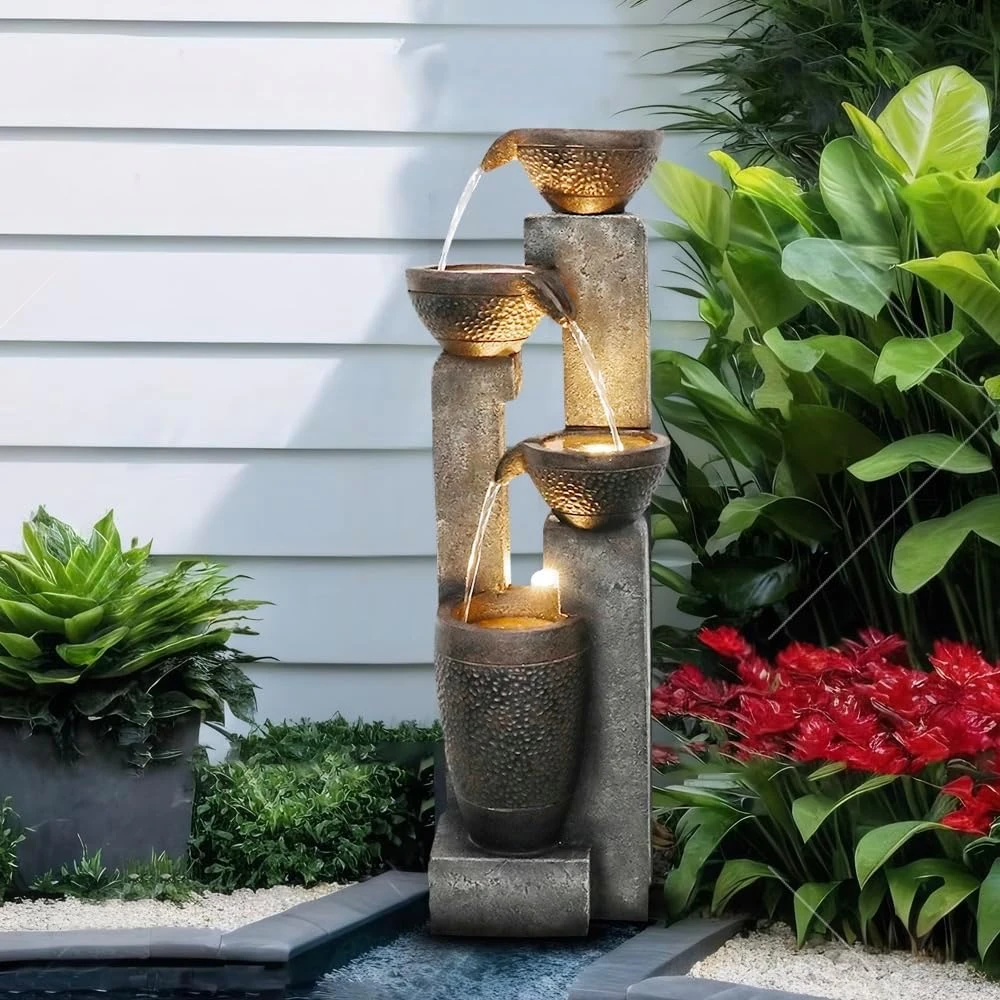
42.5″ H 5-Tier Clay Pot
$279.99
- Hand-painted terracotta glaze
- LED spotlight from top tier
- Quick-twist winterization
- 50 °F auto-drain valve
Quick Matcher:
• Best for Smart-Home Beginners: 39.3″ Modern Garden – affordable, solar-ready, RGB app.
• Best for Water-Rebates: 48″ 7-Tiered Shale – largest reservoir, lowest gallon-per-hour ratio.
• Best for Rustic Charm: 39.3″ Wishing Well – photo-friendly, lowest wattage.
• Best for Freeze Zones: 42.5″ Clay Pot – integrated auto-drain, thick-walled resin.
Installation & Maintenance 2025 Checklist
Step-by-Step: 15-Minute Leveling Method
- Site Scan: Use your phone’s LiDAR (iPhone 15 or Samsung S25) to create a 3-D map; export the STL file to check slope within 2 %.
- Base Layer: Lay ¾-inch drainage rock, tamp for 60 seconds using a hand tamper with built-in level bubble.
- Pad Placement: Center the provided poly-stone pad; confirm diagonal measurements match within ½ inch.
- Tier Lock-In: Starting from bottom, snap each tier’s bayonet mount and twist 15° clockwise until you hear a click.
- Fill & Prime: Add water to the max line, then power on pump in “prime” mode for 3 minutes to bleed air.
- Smart Pair: In the app, rename your fountain, set nightly sleep hours, and enable freeze alerts.
2025 Maintenance Intervals
• Weekly: Check water level with embedded sensor (app ping).
• Monthly: Rinse pre-filter under tap, inspect LED housing gasket.
• Quarterly: Update pump firmware via app; UV bulb check.
• Annually: Replace silicone lubricant on O-rings; conduct crack-scan with supplied UVflashlight.
Fountain Company ROI: Data-Driven Answers
Smart fountains are crossing the threshold from “nice-to-have” to “revenue-generating appliance.” According to a 2025 analysis by Zillow’s Home Value Lab, properties listing “smart water feature” in the description sold for an average premium of 3.1 %—roughly $11,400 on the median U.S. home.
Airbnb hosts see faster payback. Internal data from Hostfully (2025 Host Trends) shows outdoor fountains increase “bookability” by 18 % and allow an average nightly up-charge of $22. On a 65 % occupancy rate, the mid-tier fountain company package pays for itself in 14 months.
Utility savings matter too. Southern California Edison’s 2025 Net-Tariff Summary credits solar-fed fountains at $0.28 per kWh exported during peak hours. A 40 W solar fountain can bank $95–$120 annually in credits—effectively negating its own energy use and part of your household bill.
FAQ: What 2025 Shoppers Ask Most
- Q1. How much should a quality fountain company charge for installation in 2025?
- Industry median for a 40-inch resin fountain is $280 (Fixr 2025 Installation Index). Add $130 if trenching for electrical is required. Solar-ready models often drop that fee because no 120 V line is needed.
- Q2. Will my HOA or city restrict fountain usage during drought alerts?
- As of 2025, 31 California cities grant exemptions for recirculating fountains with less than 5 gph fresh-water top-off. Check your local fountain company ordinance PDF before ordering; most jurisdictions accept a simple one-page spec sheet.
- Q3. How long do LED lights and UV bulbs last in 2025 models?
- Next-gen SMD LEDs are rated 50,000 hours—about 11 years of dusk-to-dawn operation. UV-C quartz bulbs average 9,000 hours; replacement cost is $24 and takes 90 seconds tool-free.
- Q4. Is buying from an online-only fountain company risky?
- Return-rate data from Shopify’s 2025 Commerce Report shows specialty brands with U.S. support centers average 4.2 % returns versus 18 % for drop-shippers with overseas warehouses. Look for live chat, replacement-part portal, and at least a three-year structural warranty.
- Q5. Can I run a fountain company model off a portable battery during outages?
- Yes. A 500 Wh LiFePO₄ station will power a 35 W DC pump plus LEDs for 12–14 hours. Add a 120 W foldable panel and you achieve net-positive input on sunny days—popular among RV owners tailgating in off-grid lots.
Cameron Vale
Senior Water Feature Forecast Analyst
Cameron has tracked outdoor living trends for 14 years and authored the 2025 North American Fountain Market Forecast. His data-driven insights help homeowners and landscape architects future-proof their water feature investments.